
What makes a rock pool?


5 Key Factors (Counting Down)
Rock pools are hands down my favorite thing to research, chase, and find.
There’s just something about that moment… when you arrive at a new one for the first time and it’s full, clear, and calm — everything just lines up.
Perfect conditions.
Perfect water.
That feeling like you’ve just stumbled onto something special.
That’s the kind of stuff that turns a simple hike into a full-blown adventure.
At this point, I’ve found over 32 swimmable rock pools in Port Stephens alone… so yeah, you could probably call me a bit of a rock pool experience collector (didn’t realize that was a personality trait, but here we are ).
But not every “rock pool” people talk about is actually a rock pool — so here’s how I define the real ones.
5. It Holds Water (Even With the Tide Moving)
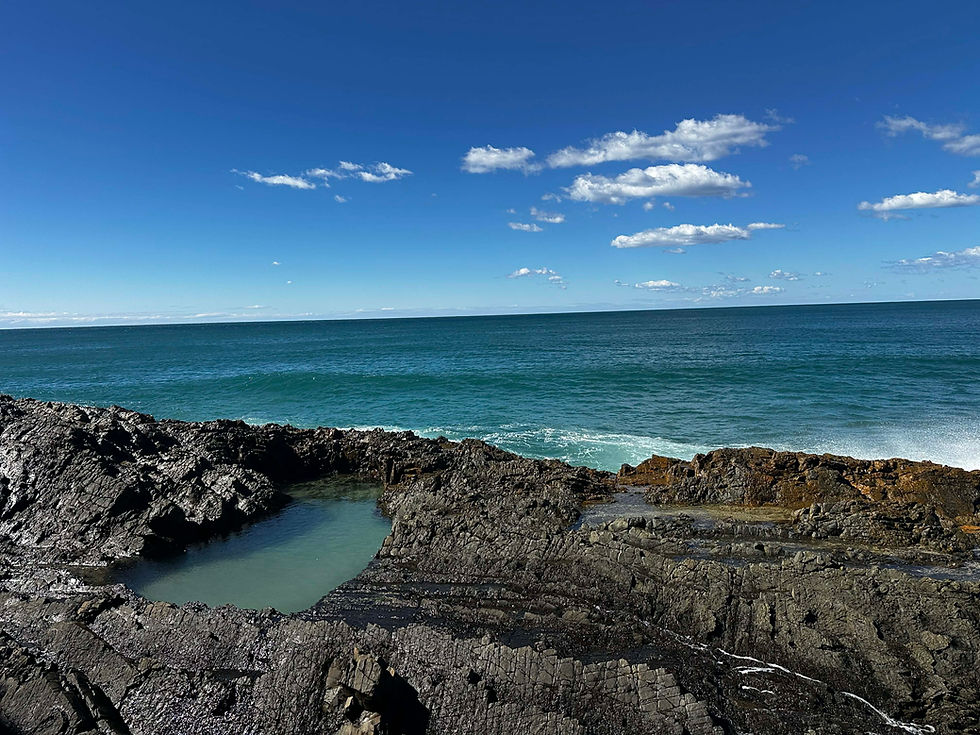
Rock pools absolutely work with the flow of the tide, they fill, refresh, and shift with the ocean. But in most cases, a true rock pool will still hold some level of water, even when the tide drops. If it completely drains out and disappears at low tide, it’s not really a pool… it’s just part of the ocean floor waiting to refill. A proper rock pool sticks around.
4. It Has Natural Water Movement.

Rock pools aren’t stagnant. Even though they’re protected, they still get washed over and refreshed by waves.
That movement keeps the water:
• clear
• oxygenated
• alive
No movement = murky, still water… not the vibe.
3. It’s Formed Naturally.

If humans built it, it’s not a rock pool.
Real rock pools are shaped over time by:
• waves
• erosion
• shifting rock
No straight edges. No tiles. No ladders. That’s what makes each one feel unique.
2. It’s Deep Enough to Be More Than Just a Tidal Pool

A rock pool doesn’t have to be super deep…
But for me, it should be deep enough to properly swim in.
If you can’t submerge, float, or actually move through the water, it leans more toward a tidal pool.
Still beautiful, just a different category.
1. It’s Closed in on All Sides

This is the non-negotiable. A true rock pool is fully enclosed by rock on all sides.
No fully open edge connecting straight out to the ocean.
If one whole side is open? That’s a cove, not a rock pool.
That enclosed structure is what:
• traps the water
• creates calm conditions
• gives that hidden, tucked-away feeling
No enclosure = no rock pool.
I've seen so many posts out there that say "rock pool" when in fact its just a little inlet or cut out in a rocky coastline that is completely open to the ocean on one side, its just photographed in a way to make it look like a rock pool, and each to their own.
I mean those spots are still beautiful and often perfect for a day swimming but
Once you start looking at rock pools in the way above… you realize how rare the good ones actually are. And maybe that’s why finding a proper one feels so rewarding. It’s not just about the water, it’s about the hunt, the timing, and that moment when everything comes together. That’s the magic.


Comments